Japan Transport Guide: Trains, IC Cards & Getting Around (2026)
⏲ 11 mins read · last updated August 2026
Japan's transport network is one of the most efficient in the world — and once you understand how it works, it becomes one of the best parts of the trip. This guide covers everything you need: shinkansen, IC cards, airport transfers, luggage forwarding, and the transport options most first-timers don't know to ask about.
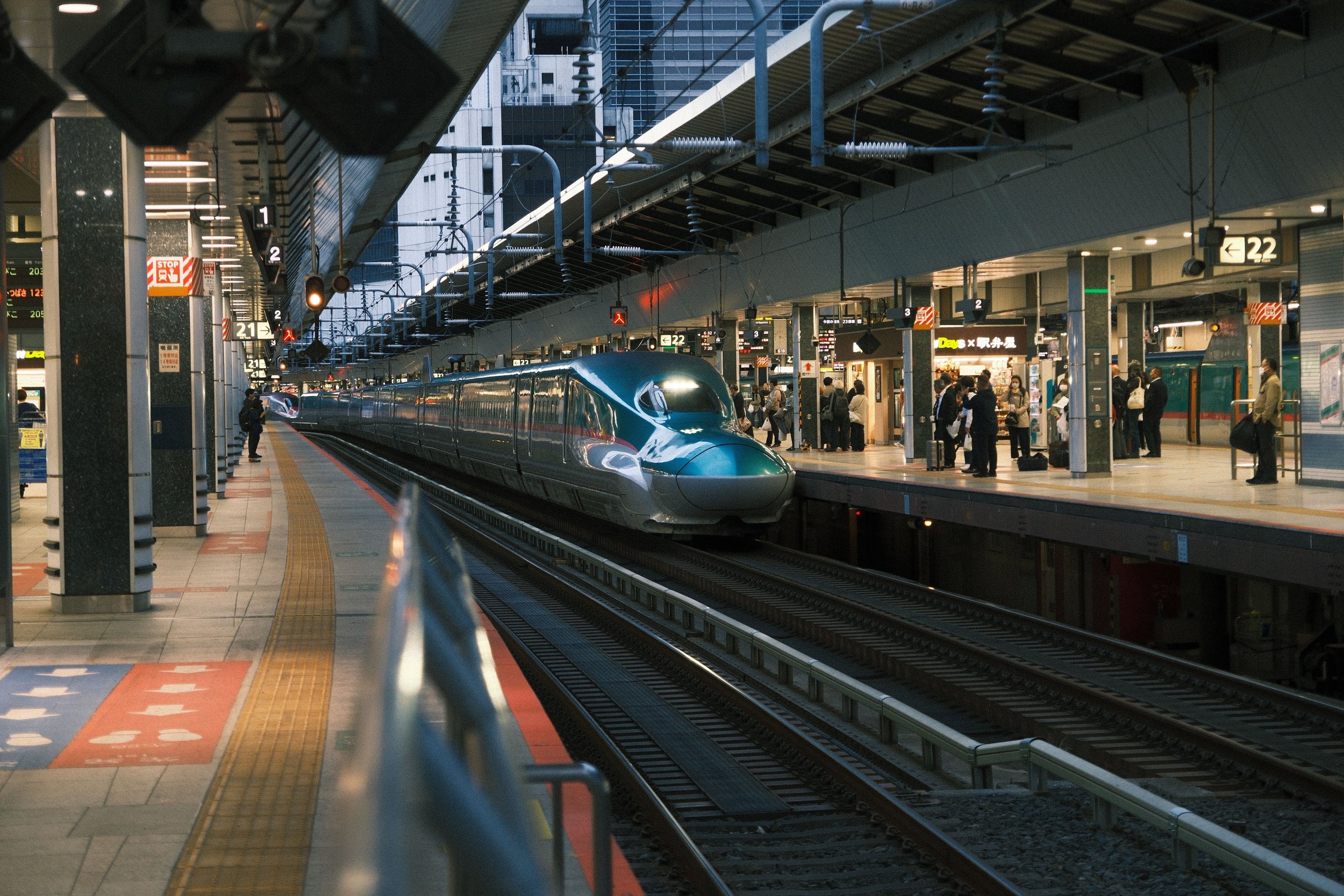
Japan transport — at a glance
Do you need a JR Pass?
After a roughly 70% price increase in October 2023, and a further rise from 1 October 2026, the JR Pass is no longer the automatic first purchase it once was. The 7-day nationwide pass is ¥53,000 (~$530 AUD); the 14-day ¥84,000 (~$840 AUD). Booking your exchange order before 30 September locks in the pre-rise pricing for up to three months of use — even if your actual trip is later in the year.For many first-time visitors on a Tokyo–Kyoto–Osaka itinerary, individual shinkansen tickets work out cheaper — a return between Tokyo and Kyoto costs around $320 AUD, already below the 7-day pass price.
The pass still makes sense for multi-region trips with several long-distance legs in a short window. It's also worth knowing that domestic flights sometimes undercut the shinkansen on longer corridors — airlines run occasional specials, and the gap can be meaningful on routes like Tokyo–Fukuoka or Tokyo–Sapporo. Overnight buses are another option for flexible or budget-conscious travellers. Working out the right combination for your specific itinerary is something we do at a.o.mi — see our Japan Trip Cost Guide for a full cost breakdown by destination.
a.o.mi's insider note
Whether the shinkansen is the right choice really depends on the route. I always check domestic flight options alongside train fares — on longer routes like Tokyo to Fukuoka or Hokkaido, a flight can be faster and cheaper. For Tokyo to Kyoto or Osaka, the shinkansen almost always wins on convenience and total journey time. There's no single answer; the right transport mix is specific to where you're going and when.
Understanding Japan's train network
Japan's rail system involves JR (which runs all shinkansen and most long-distance services), Tokyo Metro, Osaka Metro, and a range of private lines. In practice, you don't need to know which company operates a line — your IC card works across almost all of them, and Google Maps handles the rest: platform numbers, real-time departures, transfers, and fare comparisons simultaneously.
Japan's high-speed rail connects Tokyo, Kyoto, Osaka, Hiroshima, Fukuoka, and beyond. Three service types run the main Tokaido and Sanyo lines:
| Service | Stops | Tokyo → Kyoto | Approx. fare | JR Pass |
|---|---|---|---|---|
| Nozomi | Fewest | ~2 hr 15 min | ~$155 AUD | Supplement req. (¥4,000–¥8,000) |
| Hikari | A few more | ~2 hr 40 min | ~$146 AUD | ✓ Fully covered |
| Kodama | All stations | ~3 hr 45 min+ | ~$146 AUD | ✓ Fully covered |
Fares approximate at current AUD exchange rates — verify before booking. Kodama is mainly used for intermediate stops, not the full Tokyo–Kyoto run. One-way reserved seat fares shown. Fares rise during peak periods like Golden Week and cherry blossom season — see our Best Time to Visit Japan guide for a season-by-season breakdown.
💡 Why Hikari trains feel more crowded with tourists than the Nozomi
Because the Nozomi requires a per-journey supplement of ¥4,000–¥8,000 even for JR Pass holders, most pass users travel on Hikari instead. During Golden Week, Obon, and cherry blossom season, unreserved Hikari carriages can fill quickly with tourists. If you're on a JR Pass, book reserved Hikari seats when you plan your itinerary — not at the station on the day. If you're on individual tickets, Nozomi gives you the fastest service; note that during peak periods JR Central moves Nozomi to all-reserved seating, so book ahead regardless.
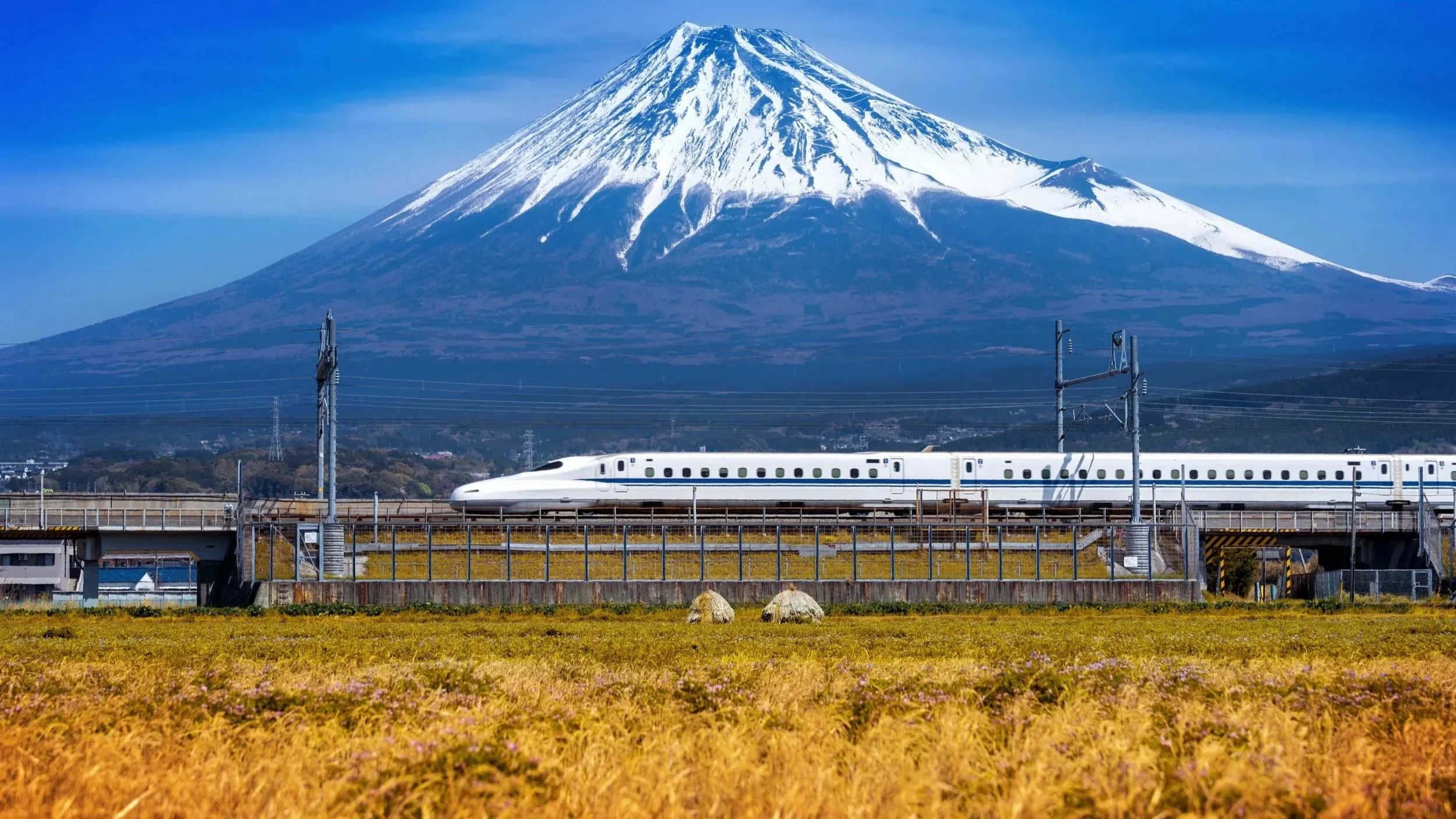
a.o.mi's insider note
If you're on the right-hand side heading south from Tokyo, Mount Fuji appears through the window for a few minutes around Shin-Fuji station — roughly 40 minutes out. No announcement, only visible on clear days. Worth being ready for.
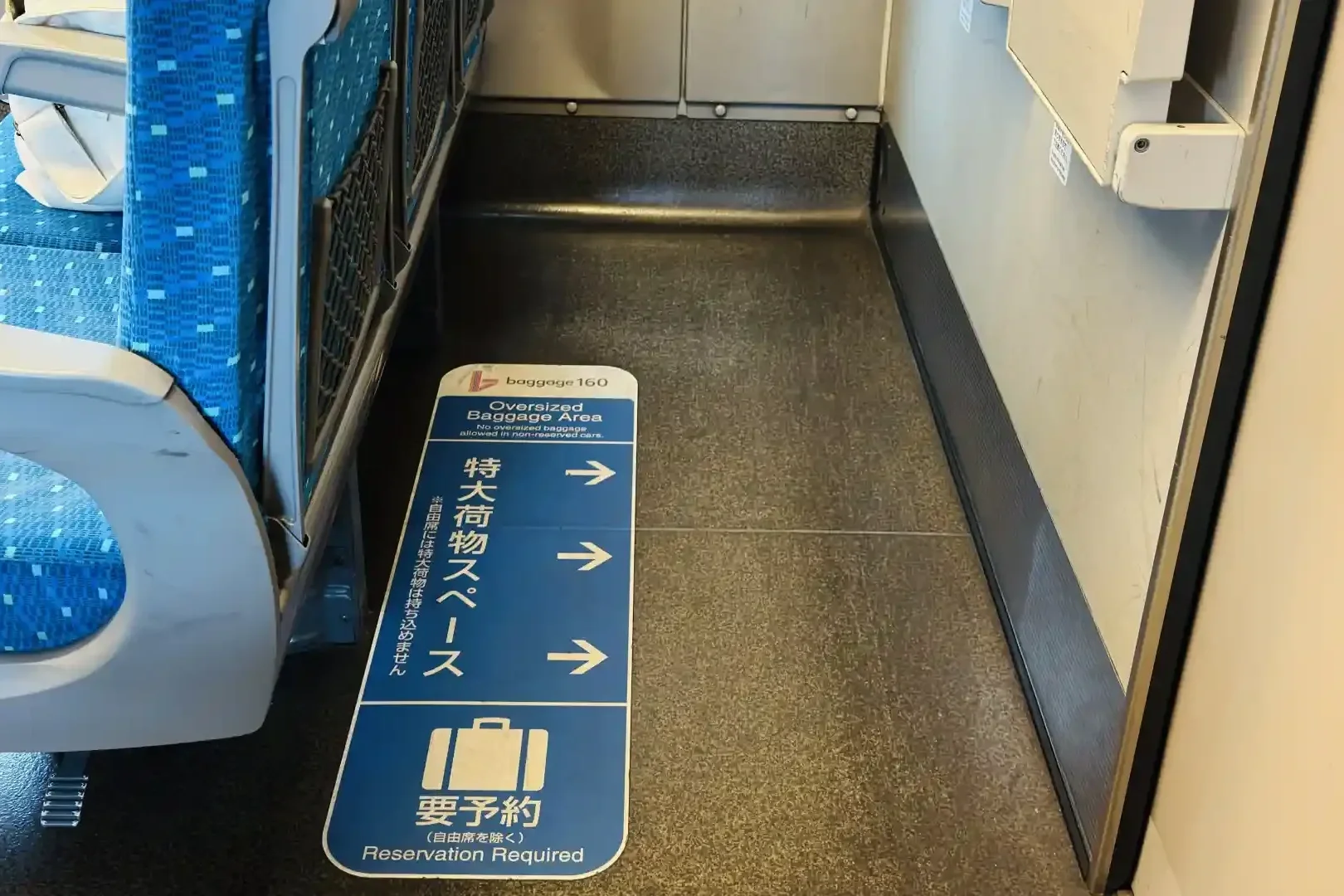
a.o.mi's insider note
The oversized luggage seats at the back of each carriage are the only designated space for large bags on the Tokaido, Sanyo, and Kyushu lines — and there are only a handful per carriage. They sell out well before the rest of the train during peak periods. If you're bringing a large suitcase rather than forwarding it, book the luggage seat the moment you lock in your travel dates.
IC cards: Suica, Pasmo & ICOCA
An IC card is a rechargeable tap-on-tap-off card that works across trains, subways, buses, convenience stores, vending machines, cafes, and coin lockers throughout Japan. It's the single most useful thing to pick up on arrival.
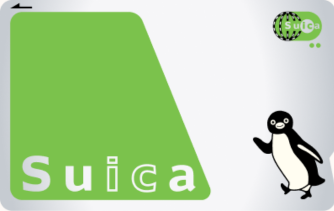
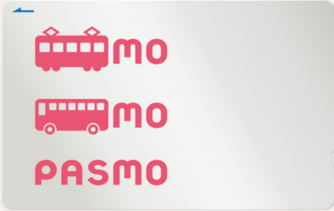
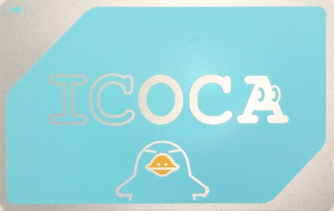
Suica (issued by JR East) and Pasmo (issued by Tokyo's private rail operators) are both Tokyo-area cards — functionally identical for visitors. ICOCA (issued by JR West) is the natural Kansai equivalent. All three are accepted nationwide since 2013: a Suica works on Osaka Metro and an ICOCA works on the Tokyo Yamanote Line. The practical rule: pick up whichever card is at the machine in front of you when you arrive. If you're flying into Kansai International, get an ICOCA there.
iPhone users: Any iPhone 8 or later — regardless of where it was purchased — includes the FeliCa chip required for mobile IC cards. iPhone users can also set up a digital Suica before landing via the Welcome Suica Mobile app — see below for details.
Android users: Most international Android phones don't have the FeliCa chip needed — get a physical card at the airport.
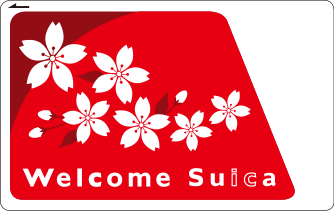
💡 Welcome Suica vs regular Suica — the difference most guides skip
The tourist-specific Welcome Suica (red card) has no deposit — but it expires 28 days from the date of first use (not from purchase), and any remaining balance is forfeited when it deactivates. It cannot be renewed. The regular green Suica costs ¥1,000 upfront — a refundable ¥500 deposit plus ¥500 starting balance — stays valid for 10 years from last use, and the balance and deposit are refundable at a JR East counter before you leave Japan (minus a small ¥220 processing fee). For a single short trip, the Welcome Suica is fine. For anyone planning to return, the regular Suica is worth the extra step: keep it between trips, top it up when you land.
One more gap most guides miss: auto top-up doesn't work outside the Tokyo area. If your Suica is set to reload automatically at the gate, that only works on Tokyo-area JR East lines. Head to Kansai or elsewhere and it stops working silently — top up manually with cash before you leave Tokyo, or you'll find out the hard way at a gate in Osaka.
There's also now a mobile-only option: Welcome Suica Mobile, an iPhone app version (iPhone 8+ / Apple Watch Series 3+) with no deposit and 180-day validity — six times longer than the 28-day physical card, and it can be topped up by Apple Pay rather than needing cash. Worth mentioning to anyone who'd rather skip the physical card queue at the airport.
One distinction worth knowing: Welcome Suica Mobile is still the tourist version underneath, so that 180-day clock still runs. If you'd rather have no expiry at all, you can add a regular Suica directly into Apple Wallet instead, skipping the Welcome Suica app entirely — you lose the deposit-free simplicity, but the card itself never expires. Availability can depend on your Apple ID's region setting.
a.o.mi's insider note
I've used the same green Suica for the better part of a decade — through Osaka, Tokyo, and back again on every return trip since moving to Sydney. The ¥500 deposit is irrelevant once you factor in the convenience. If there's any chance you're coming back to Japan, get the regular one and keep it.
Getting around Tokyo
Your IC card works across everything — JR lines, Tokyo Metro, Toei Subway, and private railways. Google Maps gives you real-time platform numbers, departure times, and transfers across all operators simultaneously. The JR Yamanote Line connects most of the areas you'll visit (Shinjuku, Shibuya, Harajuku, Ueno, Akihabara). Allow extra time during weekday rush hours, roughly 7:30–9:30am and 5:30–8pm on main lines.
Getting around Kyoto
Kyoto's bus network is the primary way to get around. The Subway & Bus 1-Day Pass (¥1,100 adults, ¥550 children) covers all city buses, the subway, Kyoto Bus, and Keihan Bus within designated areas — note that it's a separate paper ticket, not loaded to your IC card. The old ¥700 bus-only pass was discontinued in March 2024.
Two things most visitors discover too late: large suitcases are not permitted on Kyoto city buses, and station coin lockers at Kyoto fill by 9am during peak season. The fix is ecbo cloak — an app (iOS and Android) that lets you pre-book luggage storage at cafes, shops, and post offices across the city for around ¥700 per suitcase per day.
For Arashiyama: the JR San-in Line and the Keifuku tram (Randen) are both faster than the bus. For Fushimi Inari: the JR Nara Line stops directly at Inari station.
a.o.mi's insider note — the cheaper train between Kyoto and Osaka
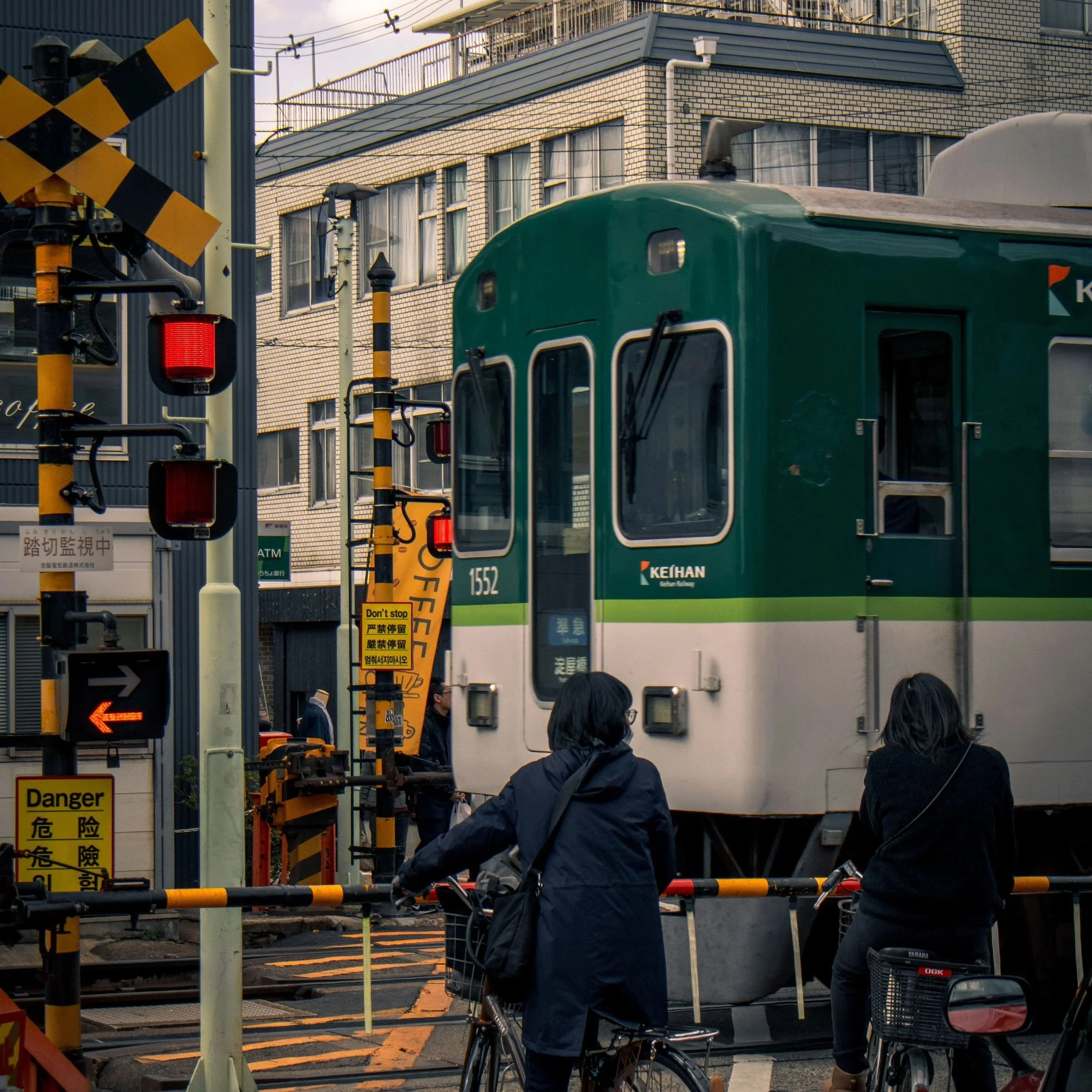
Most visitors default to JR between Kyoto and Osaka because it's on the pass — but for individual ticket holders, the Keihan line is worth knowing about. It's cheaper (around ¥430 vs ¥570 on JR) and drops you at Gion-Shijo in central Kyoto, which is far more useful for sightseeing than arriving at Kyoto Station. To reach it from Osaka: take one stop on the Midosuji subway from Umeda to Yodoyabashi (¥180, 3 minutes), then board the Keihan. Most guides skip it entirely because it's not JR-operated.
a.o.mi's insider note
The Higashiyama corridor — Kiyomizudera down through Ninenzaka and into Gion — is about 2km of narrow streets. During peak season the buses sit in traffic. Walking the whole stretch takes around 25–30 minutes, is faster than waiting, and the side streets are worth the time. Save the day pass for areas where it actually saves you something.
Airport transfers
| Type | Time | Approx. cost | Notes |
|---|---|---|---|
| Narita Express (N'EX) | ~80 min | ~$35 AUD | Best for Shinjuku, Shibuya, Yokohama; reserved seating |
| Keisei Skyliner | ~40 min | ~$28 AUD | Fastest to Ueno/Asakusa; change at Nippori for Yamanote |
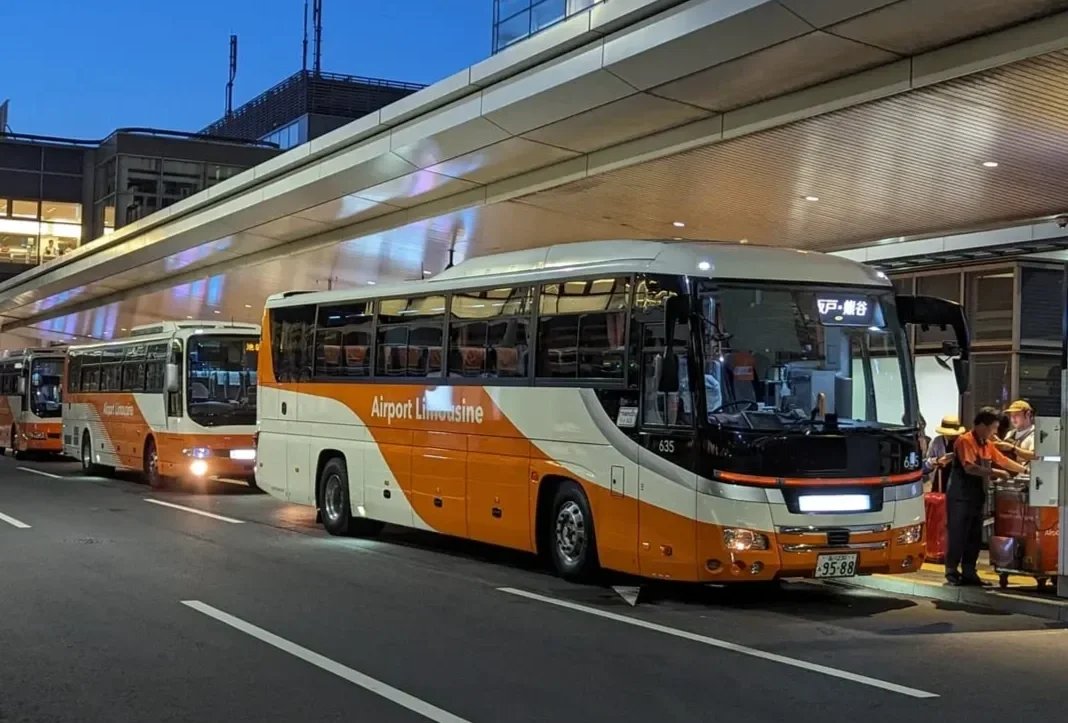
| Limousine bus | ~90–120 min | ~$20–30 AUD | Door-to-hotel coverage; luggage in hold — good after a long flight |
| Budget highway bus | ~90–120 min | ~$10–20 AUD | No reservation — first come, first served at the bus stand |
Narita is ~80km from central Tokyo. Haneda (HND) is significantly closer — fares are often lower at Narita, but Haneda saves time and transfer cost on both ends. Worth checking both airports when booking flights.
| Type | Time | Approx. cost | Notes |
|---|---|---|---|
| Tokyo Monorail | ~15 min to Hamamatsucho | ~$6 AUD | Connect to Yamanote Line at Hamamatsucho |
| Keikyu Line | ~35 min to Shinagawa | ~$5–8 AUD | Direct to Shinagawa, Shinjuku, Yokohama |
| Limousine bus | ~40–60 min | ~$14–20 AUD | Covers major hotel areas; luggage in hold |
| Type | Time | Approx. cost | Notes |
|---|---|---|---|
| Nankai Rapi:t | ~35–40 min to Namba | ~$16 AUD | All reserved seats; futuristic design — worth the extra over the Express |
| Nankai Airport Express | ~45–50 min to Namba | ~$10 AUD | No reservation; standard commuter train; can get crowded |
| JR Haruka | ~75 min to Kyoto | ~$38 AUD | Direct to Kyoto, Shin-Osaka, Tennoji; best if Kyoto is your first stop |
| Limousine bus | Varies | ~$15–26 AUD | Direct to Osaka city, Kyoto, and Kobe hotel areas; luggage in hold |
All fares approximate at current exchange rates. Verify before travel.
a.o.mi's insider note
After a long-haul flight from Australia, the airport bus is genuinely worth choosing over the train if you're arriving with multiple bags — luggage goes in the hold and you're not managing it through two connections on your first day. At Narita especially, the difference in stress between the limousine bus and the N'EX is more than the time difference suggests.
Luggage forwarding: te-bura kanko
The most useful transport decision you'll make in Japan has nothing to do with trains. Takkyubin (宅急便) — luggage forwarding — lets you send bags directly from one hotel to the next while you travel hands-free. The Japanese call this te-bura kanko (手ぶら観光): sightseeing without burden. Ask at hotel reception the evening before departure, fill in the destination hotel details, keep your tracking number. Around ¥2,000–2,500 per bag (~$15–20 AUD), next-day delivery between most major cities.
💡 The shinkansen luggage rule most visitors discover at the platform
Since May 2020, any bag with total dimensions over 160cm (length + width + height combined) must be pre-booked into a designated oversized luggage area at the back of each carriage on the Tokaido, Sanyo, and Kyushu Shinkansen lines. Arriving without a reservation means a ¥1,000 on-the-spot penalty and your bag relocated by the conductor. Reserving costs nothing extra — ask for an "oversized luggage seat" when booking any reserved shinkansen ticket at a JR counter or machine. The catch: most large 28–30 inch suitcases sit right around this threshold. Measure before you travel, reserve when you book, or forward the bag by takkyubin and avoid the calculation entirely.
Getting the transport right — the right combination of trains, flights, and luggage logistics — makes a real difference to how a Japan trip feels. Let us work it out with you.
Common mistakes to avoid
For a full list of first-visit pitfalls, see our Japan Travel Mistakes guide. A few transport-specific ones worth calling out here:
Buying the JR Pass without running the numbers. Calculate your actual route cost first — it's the only way to know if it pays off for your specific itinerary.
Arriving without an IC card. Three minutes at an airport vending machine on arrival saves friction at every gate for the rest of the trip.
Turning up to the shinkansen with an unmeasured suitcase. If your bag is anywhere near 160cm total dimensions, reserve an oversized luggage seat when you book — or forward it by takkyubin.
Not reserving shinkansen seats during peak periods. Unreserved carriages fill quickly during Golden Week (late April–early May), Obon (mid-August), and cherry blossom season (late March–early April). Reserved seats are the same price.
Using IC cards across certain JR operator boundaries on a single journey. If you're on a local train crossing from the JR East into JR Central territory — around Atami, heading toward Hakone or the Izu Peninsula — your IC card may be rejected at the exit gate and locked. You'll need a staff counter to clear it. For day trips in this direction, buy a point-to-point ticket instead of tapping through.
Underestimating walking distances inside major stations. Shinjuku, Shibuya, and Tokyo Station can take 10–15 minutes to cross. Build in transfer time for tight connections.
Japan's transport network rewards a small amount of planning upfront. After that, it largely looks after itself.
Frequently asked questions
Do I need a JR Pass to travel around Japan?
Most first-time visitors on a standard Tokyo–Kyoto–Osaka itinerary will find individual shinkansen tickets cheaper than the JR Pass after the 2023 price increases. The pass offers genuine value for trips covering multiple distant regions — adding Hiroshima, Fukuoka, Kanazawa, or Tohoku. Calculate your specific route cost before purchasing rather than buying it automatically.
What is the best IC card for tourists visiting Japan?
For a single trip of under four weeks, the Welcome Suica (red card) is the most convenient option — no deposit, available at airport vending machines, and accepted nationwide. If you plan to return to Japan, the regular green Suica is better: refundable ¥500 deposit, valid for 10 years. If you're flying into Kansai International Airport, pick up an ICOCA there — it works identically across Japan but is easier to buy at your arrival airport.
Can I take my suitcase on the shinkansen?
Yes, but any bag with total dimensions over 160cm requires a free pre-reserved oversized luggage seat on the Tokaido, Sanyo, and Kyushu Shinkansen lines — arriving without one incurs a ¥1,000 penalty. Most large checked suitcases sit close to this threshold. Reserve when you book your ticket, or send the bag ahead by luggage forwarding (takkyubin) for around $15–20 AUD with next-day delivery.
Is Google Maps reliable for navigating Japan's trains?
Google Maps works extremely well across Japan's entire rail network — covering JR, Metro, and private railways simultaneously, with real-time platform numbers, departure times, and fare comparisons. It's what most Japanese commuters use and is significantly more reliable here than in most other countries.
What is the easiest way to travel between Tokyo, Kyoto, and Osaka?
The shinkansen is the fastest and most comfortable option between Tokyo, Kyoto, and Osaka — the Hikari takes around 2 hours 40 minutes from Tokyo to Kyoto and is fully covered by the JR Pass. Individual Nozomi tickets are around 25 minutes faster. For some routes and budgets, domestic flights or overnight buses are worth comparing alongside train fares.
You might also find these useful
→ How much does a trip to Japan cost from Australia?
→ Japan Travel Guide: everything you need to know before you go
→ When is the best time to visit Japan? A season-by-season guide
→ 10 common Japan travel mistakes to avoid
→ The perfect 14-day Japan itinerary for first-time visitors
plan your personalised japan journey
tell us about your trip and we'll be in touch within 1–2 business days to start designing your itinerary.
start planning my trip