⏲ 11 mins read · last updated July 2026
One of the best ways into any Japan travel guide is through its food — and for first-time Japan visitors, it's often the part of the trip people remember most clearly. From steaming bowls of ramen and freshly made sushi to regional specialities and convenience store snacks, Japan's culinary landscape goes far beyond what most travellers experience at home.
At a glance — what to eat first
Why food is such a big part of travelling in Japan
Food is woven into everyday life in Japan in a way that's hard to appreciate until you're there. Each region has its own specialities, many dishes shift with the seasons, and even a quick lunch is often prepared with real care. None of this requires a big budget — some of the most memorable meals turn up in small neighbourhood restaurants and train station food halls.
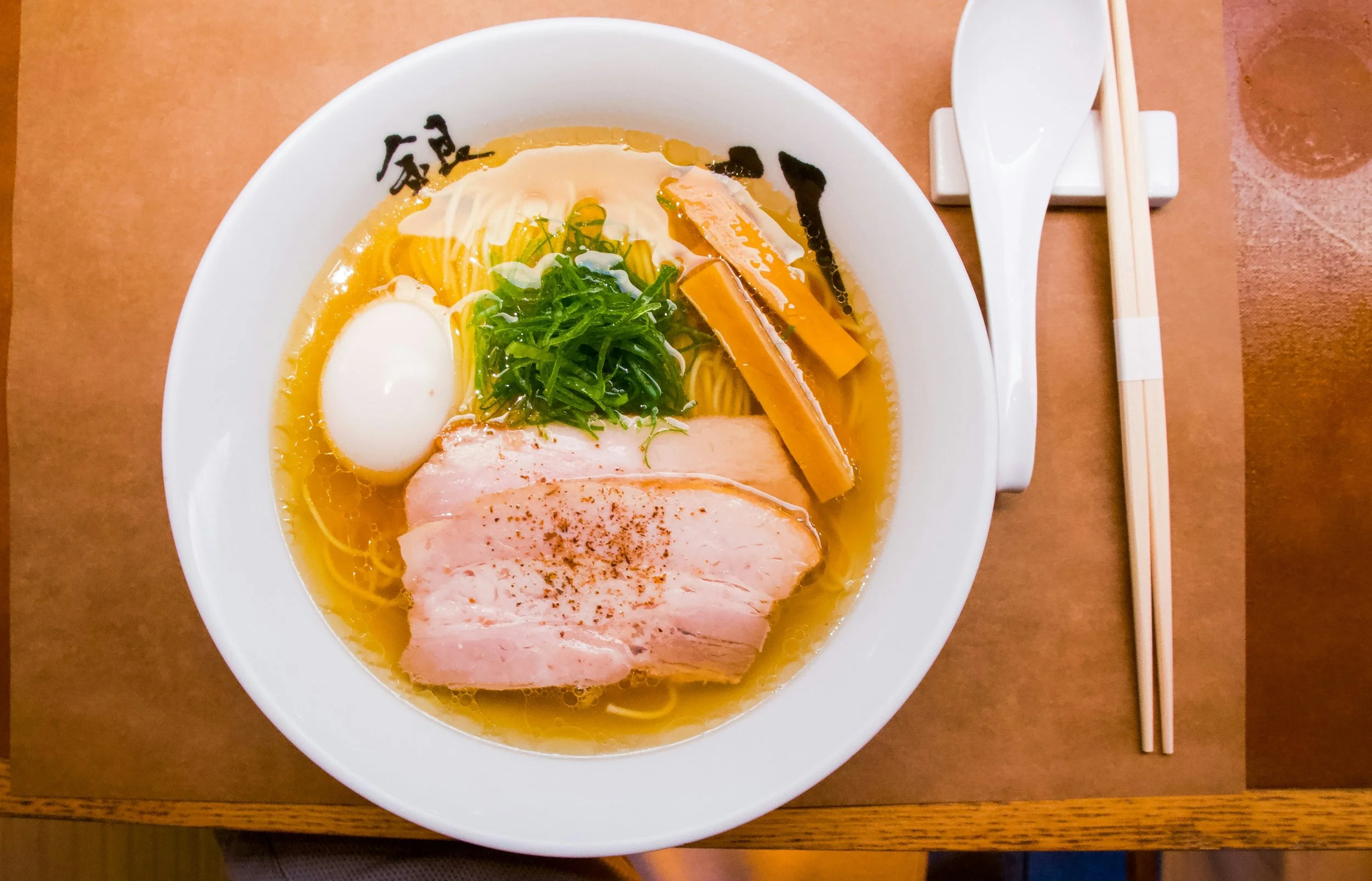
Ramen
Ramen is Japan's most famous comfort food: wheat noodles in a rich broth, usually topped with pork, egg, seaweed, and spring onion. Main styles: tonkotsu, shoyu, miso, and shio. Tokyo, Fukuoka, and Sapporo are the names that come up again and again.
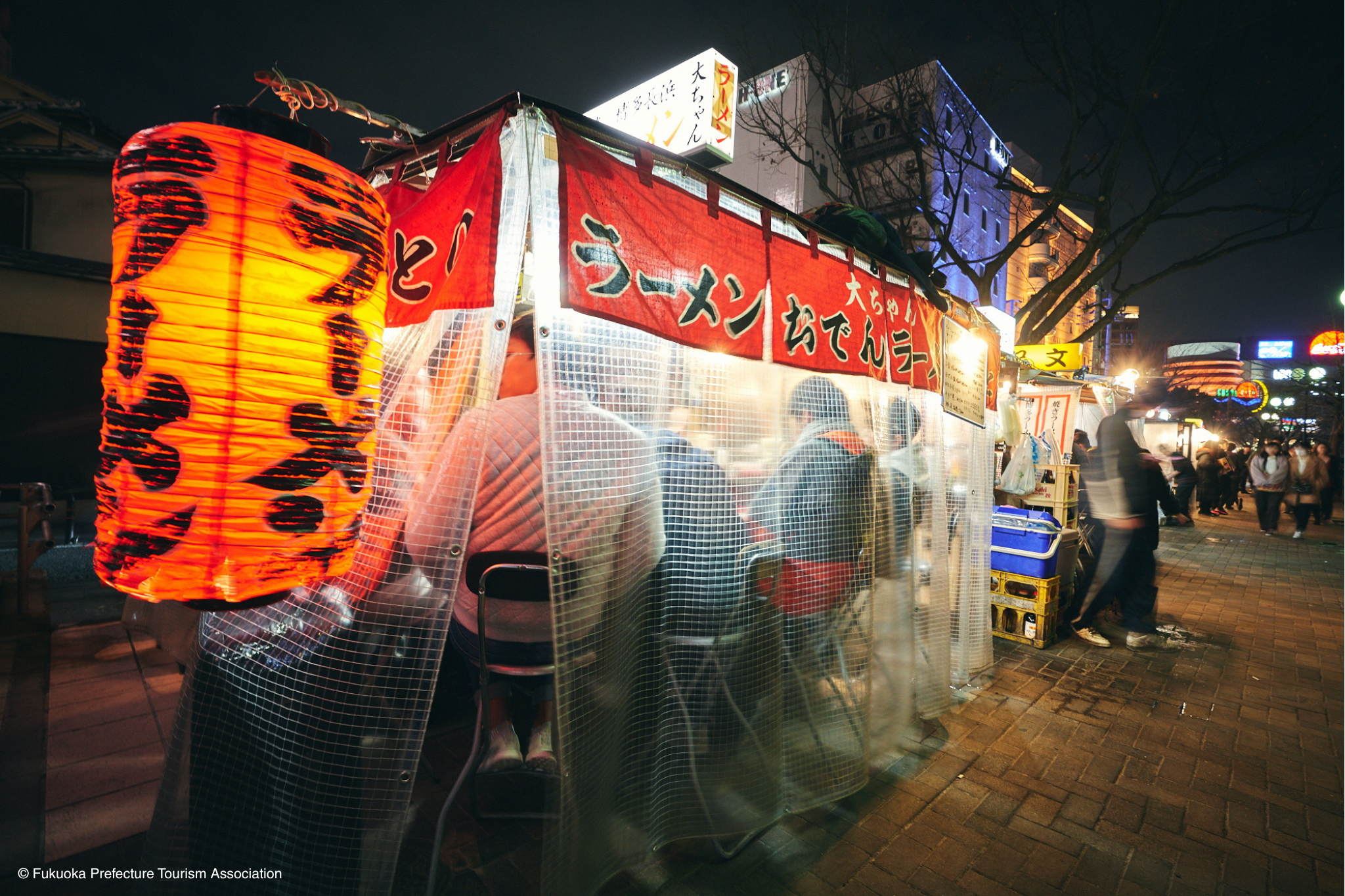
a.o.mi's insider note
Hakata ramen in Fukuoka, eaten standing at a yatai stall by the river late at night, is one of my favourite food memories from 10 years living in Japan.
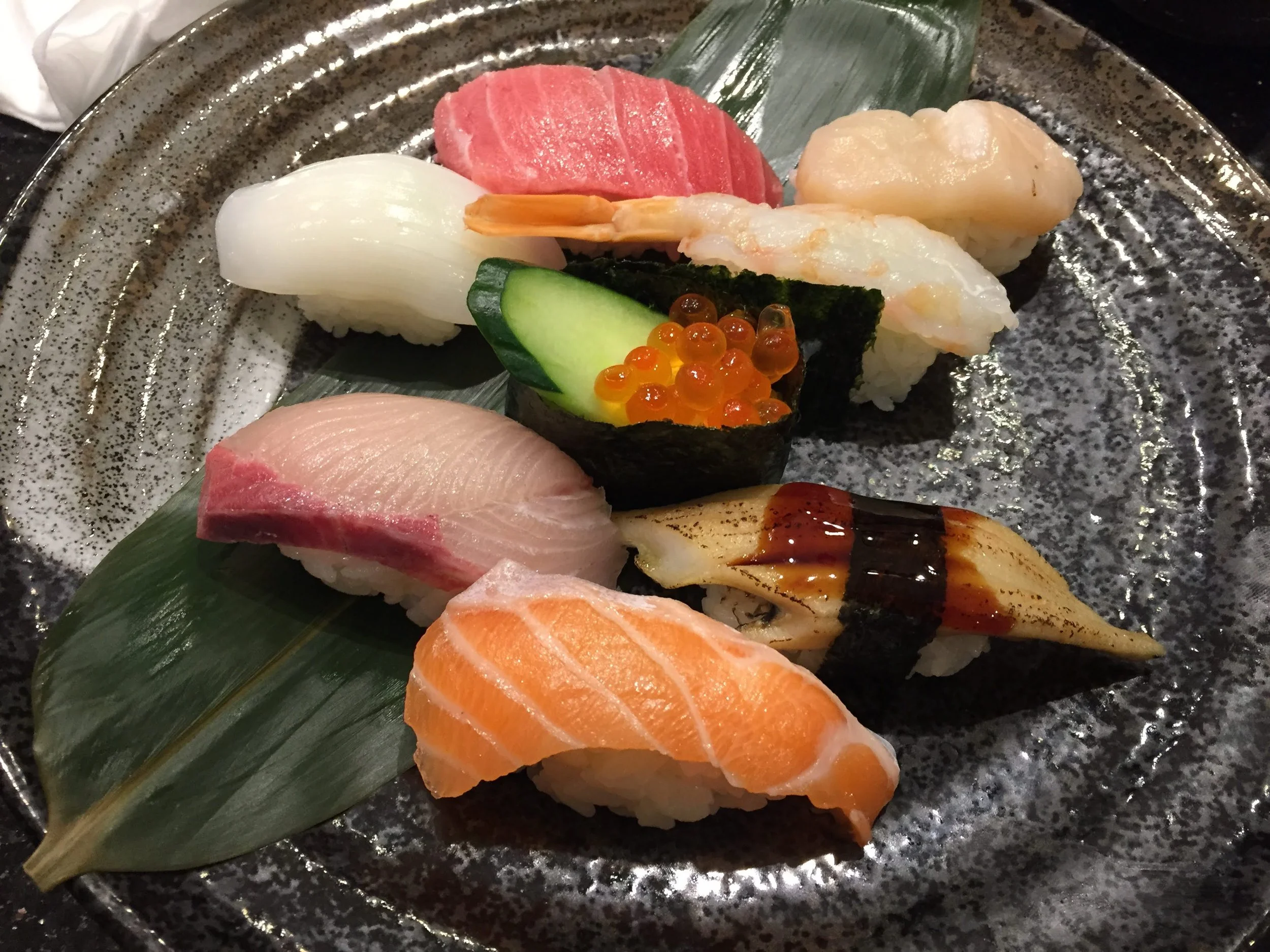
Sushi
Sushi in Japan is a different experience from sushi anywhere else — the rice temperature, the knife work, the pacing all matter. Tokyo, Kanazawa, and Osaka are reliable, but a neighbourhood shop with no English menu can be the standout meal of the trip.
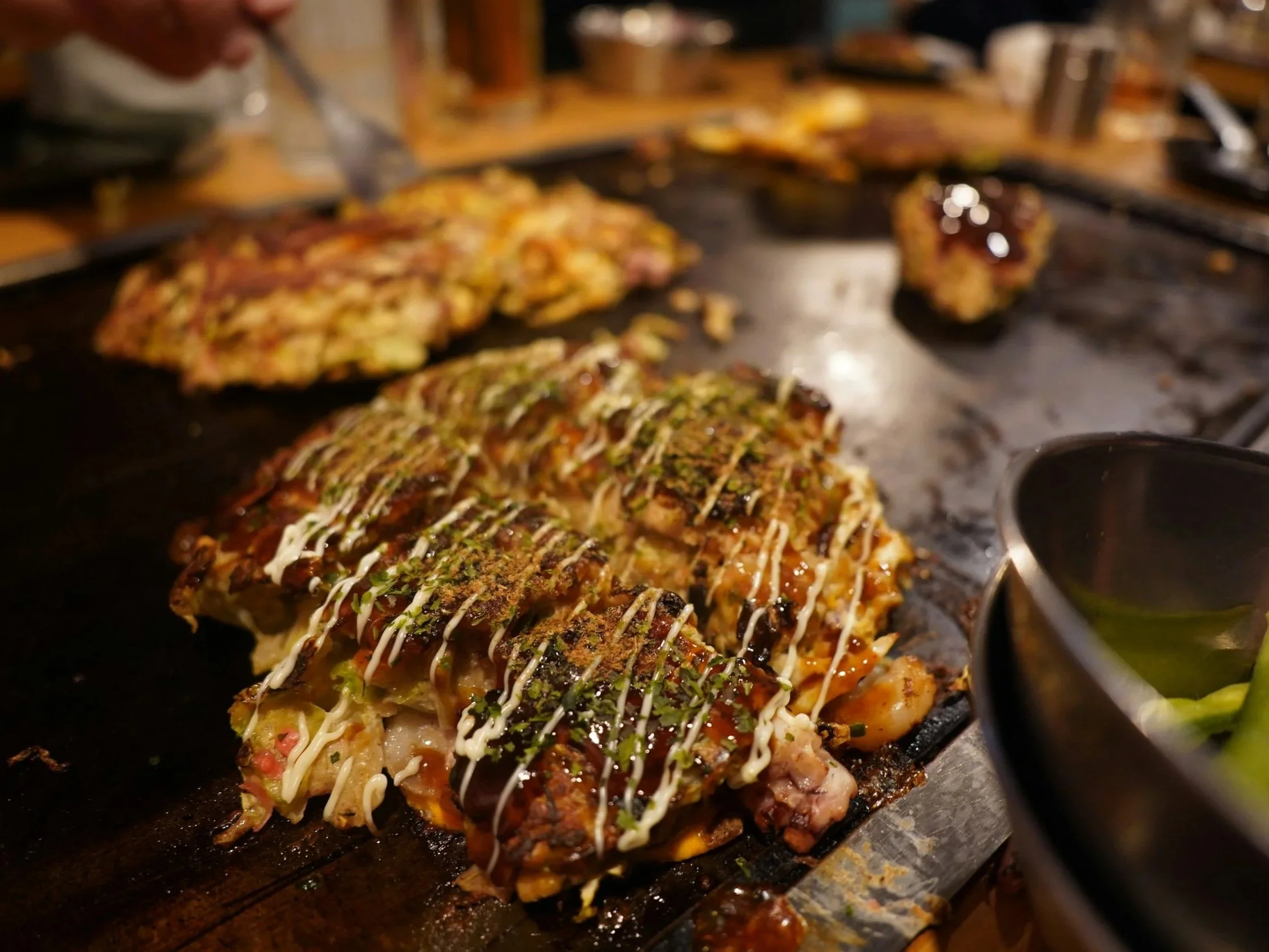
Okonomiyaki and takoyaki
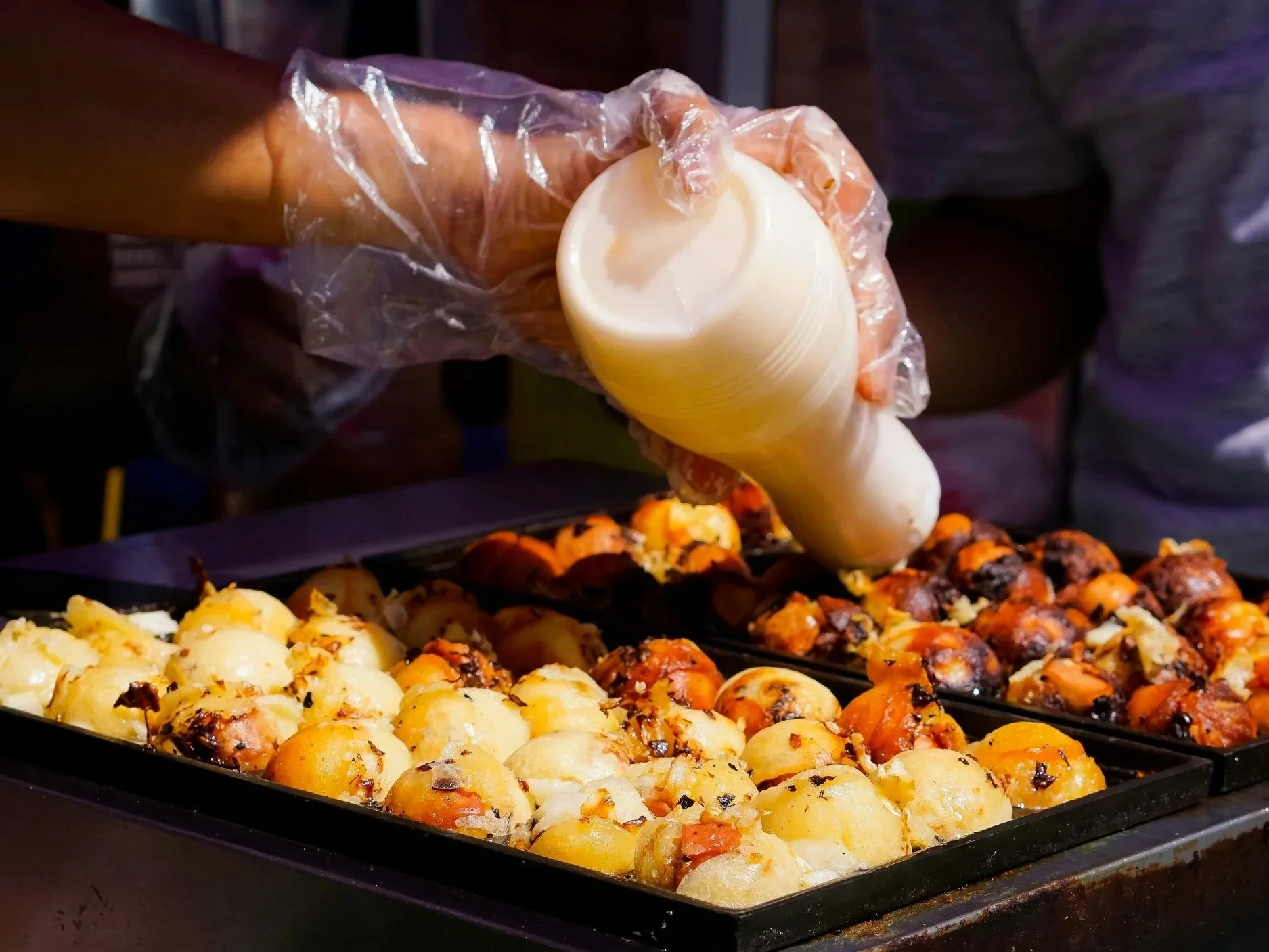
Osaka's savoury pancake and octopus-ball street food, both worth seeking out around Dotonbori.
a.o.mi's insider note
Most travellers try okonomiyaki in Osaka and assume that's the definitive version. Hiroshima's is genuinely different — and worth seeking out separately. Where the Osaka style mixes everything into the batter before cooking, Hiroshima-style builds in layers: a thin crêpe base, then cabbage, then noodles, then egg, all stacked and cooked separately before being pressed together on the iron plate. The result is completely different in texture and volume. If your itinerary goes through Hiroshima, it's one of the meals to plan around.
Tempura
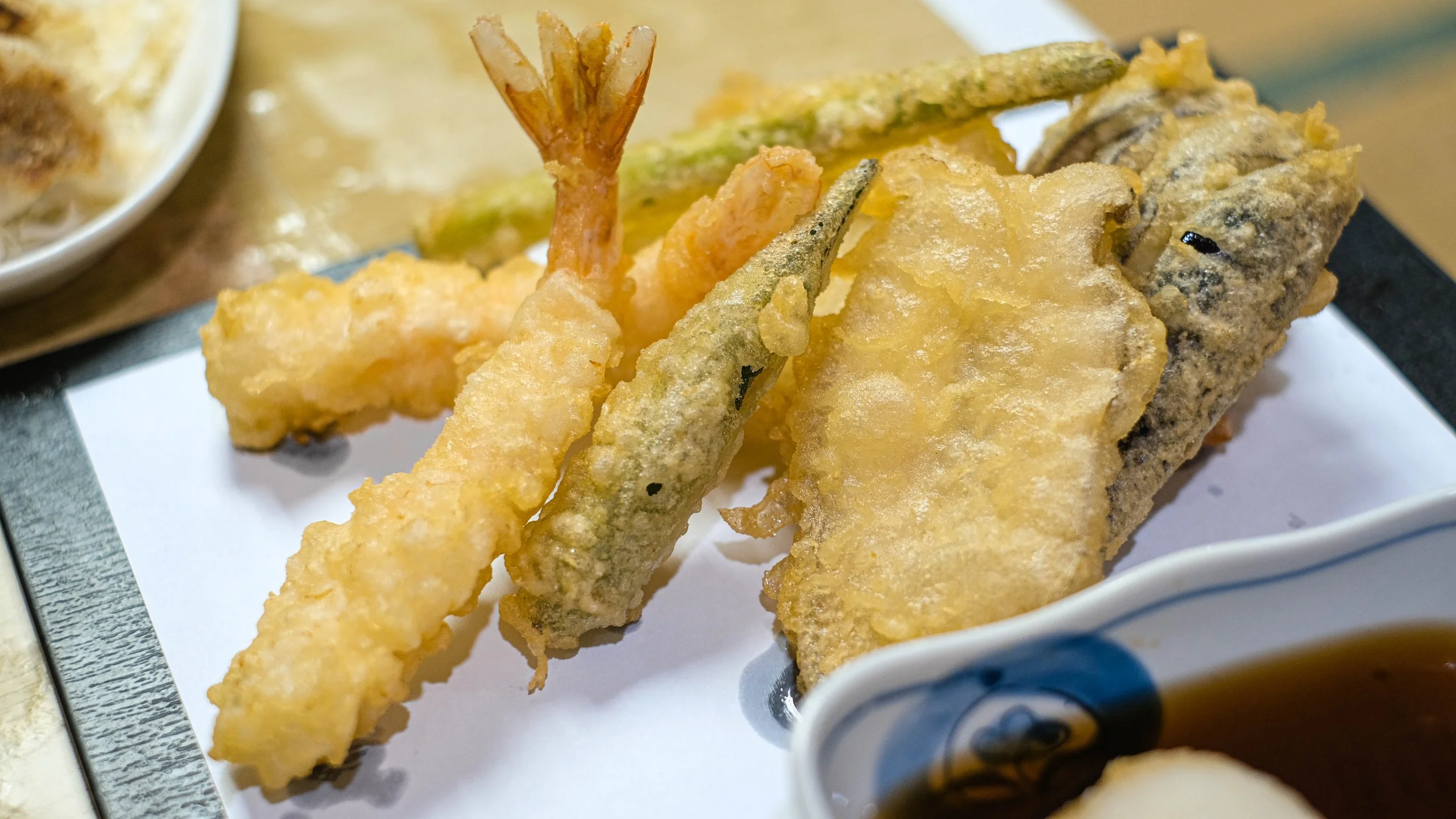
Seafood or vegetables in a light batter, fried until crisp — delicate rather than heavy.
a.o.mi's insider note
The best way to eat tempura in Japan isn't from a platter — it's at a counter, where each piece comes directly from the oil to your plate one at a time. The rule at a proper tempura counter is to eat each piece within about a minute of it arriving, while the batter is still at its peak. It sounds obvious, but most first-timers get distracted and let it sit. Counter tempura also has a light-to-rich order — delicate fish and vegetables first, richer ingredients like anago (sea eel) and kabocha later — and the chef has already sequenced it that way, so follow the order as it comes rather than skipping around.
Yakiniku
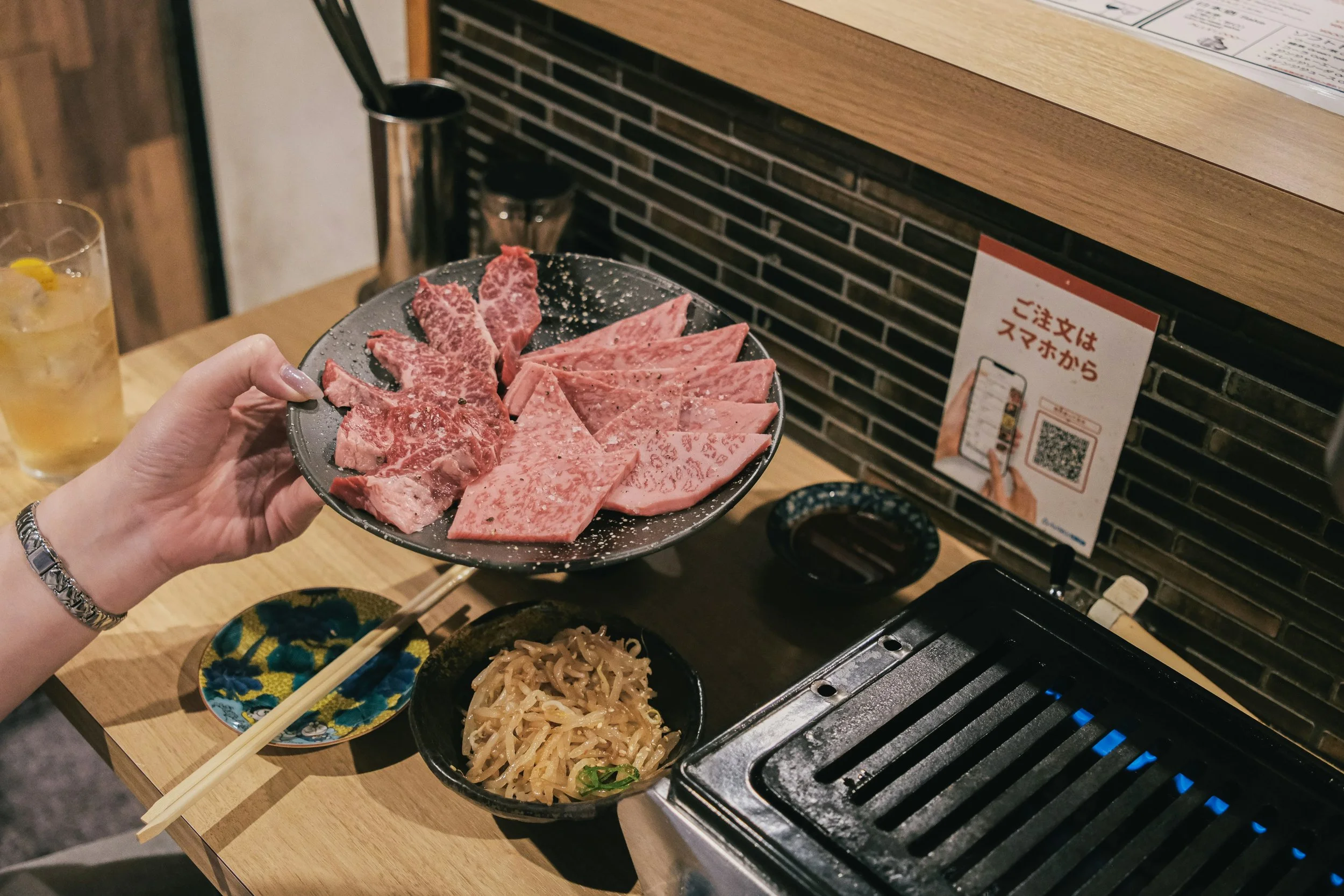
Japan's grill-your-own-meat dining format. Tokyo, Osaka, and Kobe are the standout cities.
Katsu
Breaded, deep-fried cutlets — a simple, satisfying meal and an easy first choice for nervous first-timers.
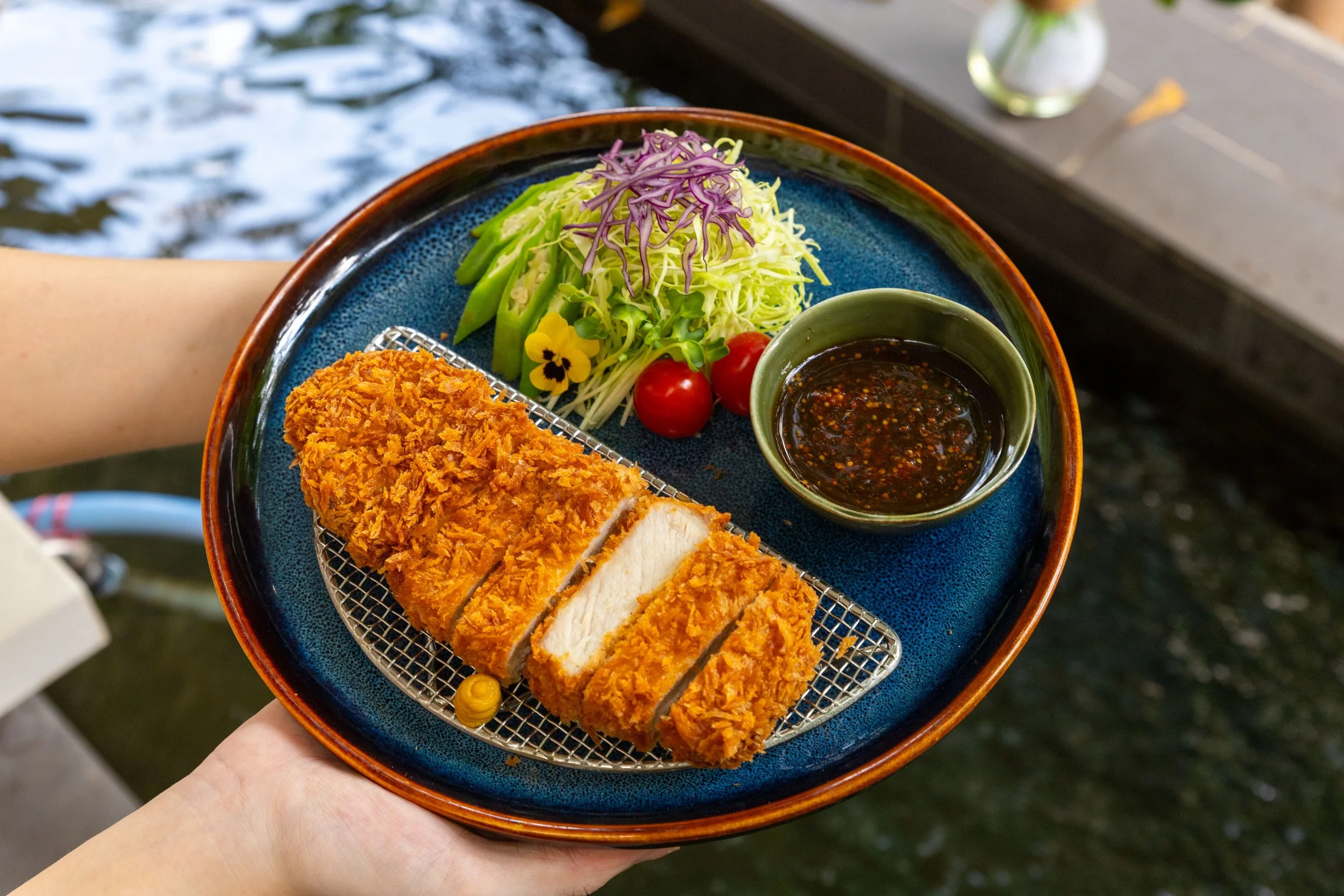
At most tonkatsu chains — Wako, Saboten, Katsukura among them — rice, cabbage, and miso soup refills are free and unlimited. The word to use is okawari (おかわり). There's also a bigger ordering decision most first-timers miss: rosu (loin) versus hire (tenderloin). Rosu has more marbling and flavour; hire is leaner and more tender. Premium tonkatsu restaurants will often suggest you eat the first piece with salt before adding sauce, to taste the pork itself — if they do, follow the suggestion. It's how the meat is meant to be evaluated.
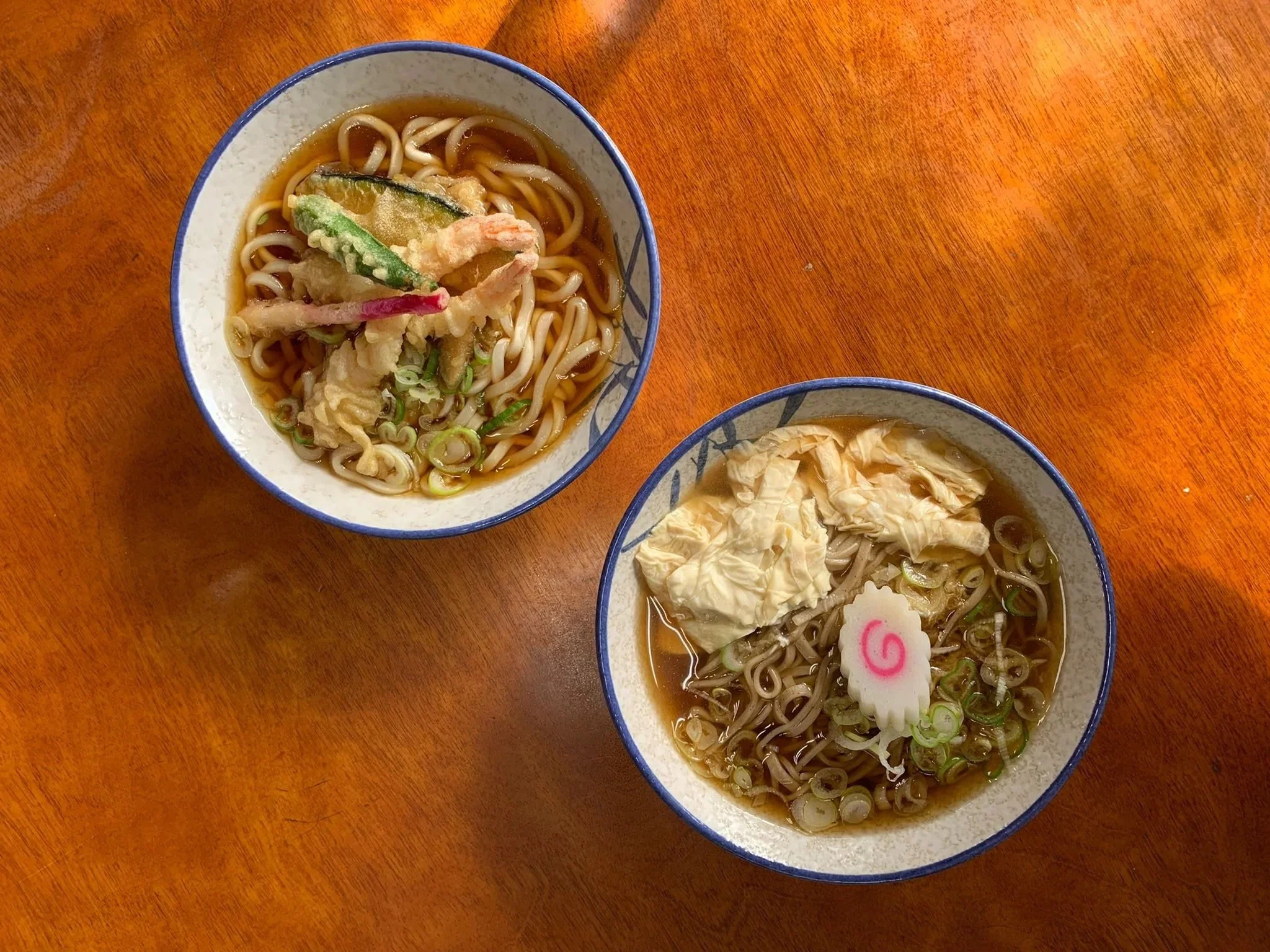
Udon and Soba
Hot or cold wheat/buckwheat noodles, depending on the season.
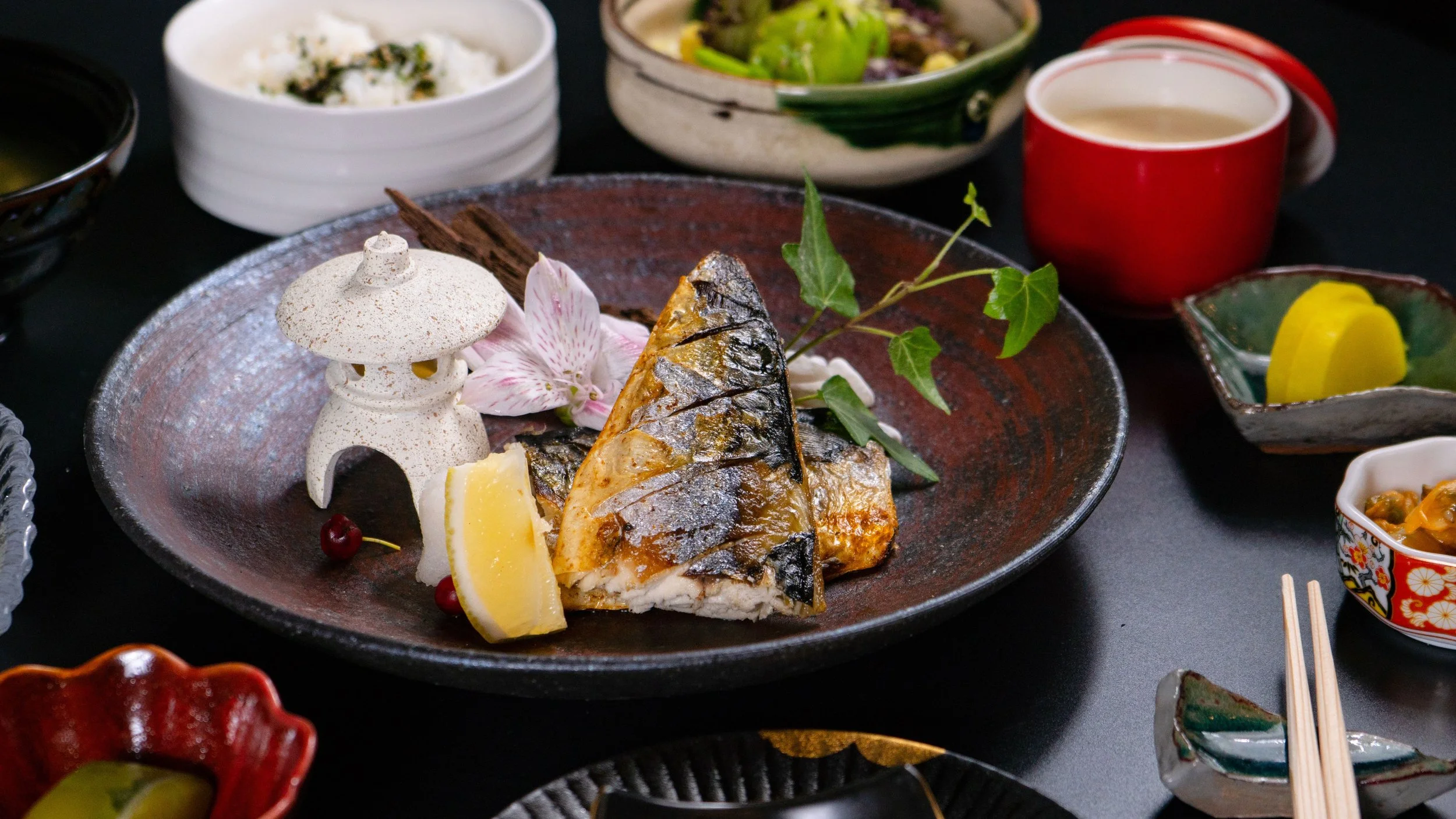
Kaiseki
A multi-course seasonal meal often served as part of a ryokan stay. Kyoto and Hakone are both excellent places to try it — see our guide on where to stay in Japan if a ryokan stay is part of your plan.
a.o.mi's insider note:
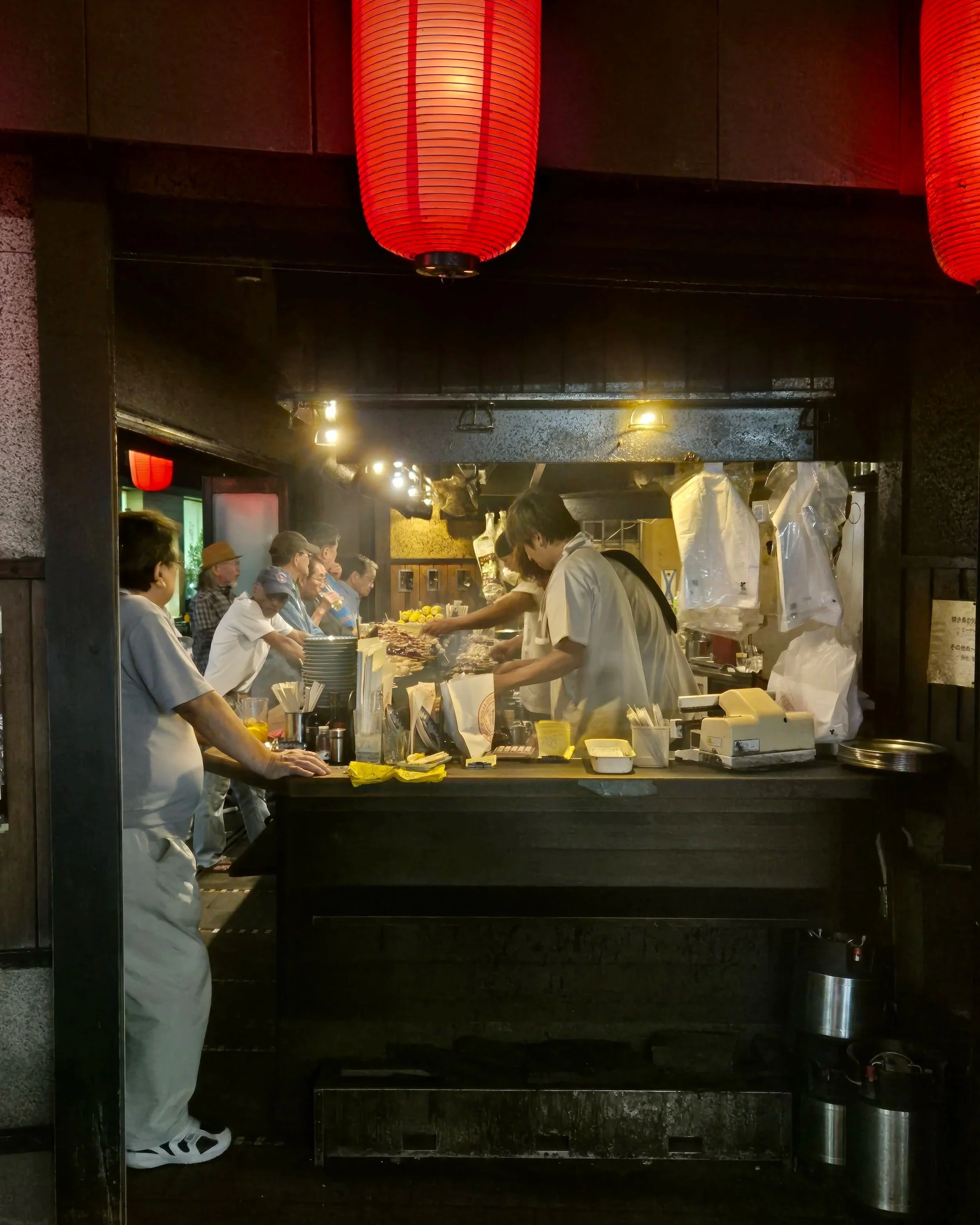
Japan has a long tradition of tachinomi: bars where you eat and drink standing up — no seats, no tables to linger at. It sounds like a downgrade until you're in one; the lack of chairs makes the atmosphere looser and faster, and it's easier to strike up a conversation with whoever's next to you.
one of our favourite Tokyo nights happened completely by accident — wandering around Kichijoji Station, known for its trendy bars and food scene, and stumbling into a tachinomi with no plan at all. we ended up staying until closing, chatting with locals the whole night. that's the real draw — it's less about the drinks, more about who ends up standing next to you.
Want a Japan itinerary built around the meals you actually want to eat? — tell us what you love to eat and we'll build the trip around it.
Japanese convenience store food
7-Eleven, FamilyMart, and Lawson all sell onigiri, sandwiches, bento, fried chicken, and desserts that are affordable and genuinely good.
Don't forget regional specialities
Hida beef in Takayama, Hiroshima-style okonomiyaki, Hakata ramen in Fukuoka, fresh seafood in Hokkaido. See our 14-day Japan itinerary for how these fit on a longer trip.
a.o.mi's insider note
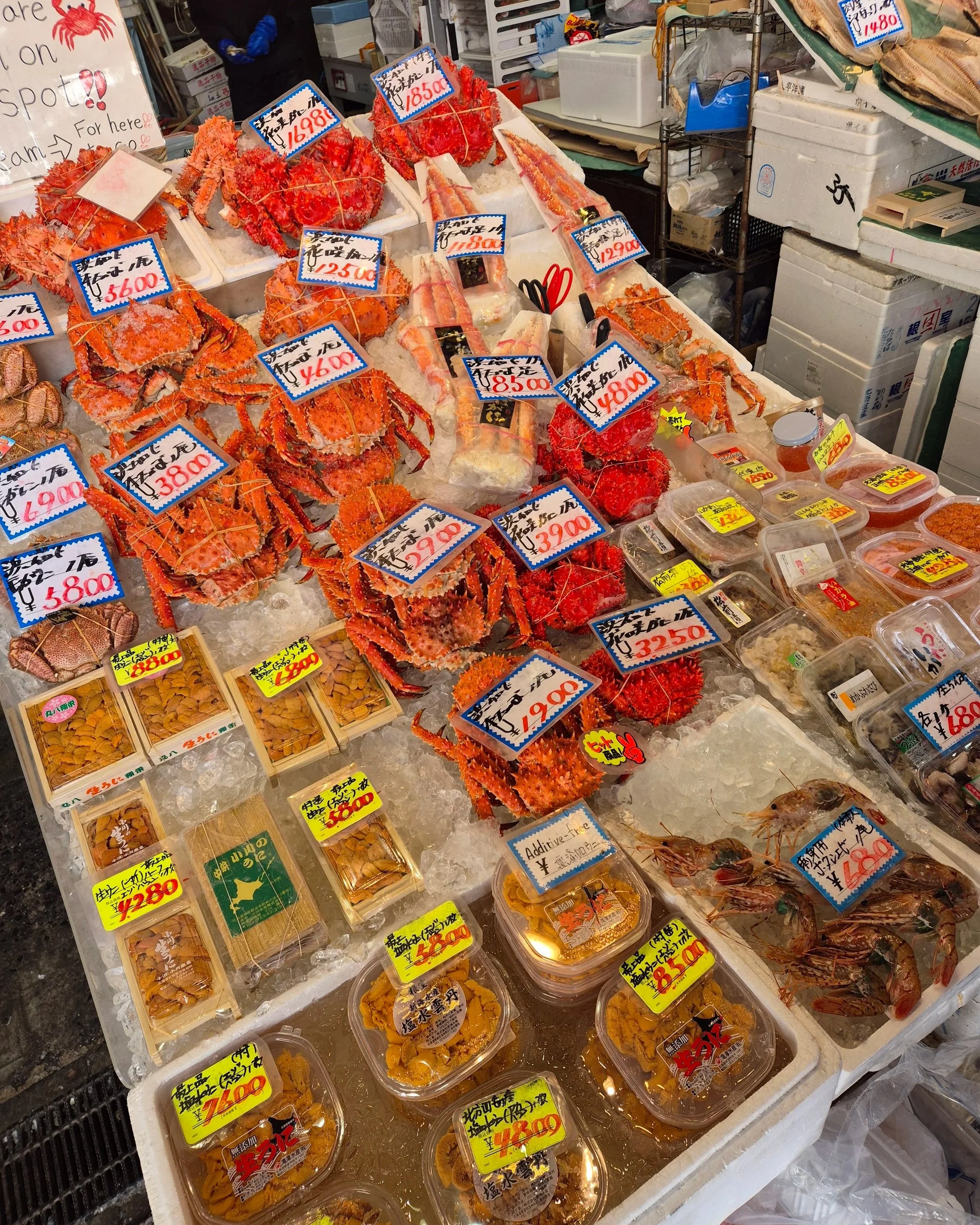
Most travellers head straight for a seafood bowl at Nijo Market in Sapporo — which is the right instinct, but the ordering decision matters. The tourist default is the largest, most photogenic kaisen-don. What local regulars actually order, particularly at places like Nagamori, is the grilled fish set (yakizakana teishoku) — salmon harasu or hokke, cooked to order, fatty and far cheaper than the raw bowls. The smarter move is to start with the grilled set, then walk the market stalls and graze — fresh uni, hotate, botan ebi sold by the piece — rather than blowing the whole budget on one bowl and being too full to try anything else. Get there early: the market opens around 7am, the best limited-quantity bowls sell out in the first sitting, and it closes early afternoon. Avoid Wednesdays — most stalls are closed.
How much should you budget for food in Japan?
| Budget level | Per person, per day |
|---|---|
| Budget | $20–40 AUD |
| Mid-range | $50–100 AUD |
| Premium | $150+ AUD |
Figures are a guide only and depend on how often you choose premium dining experiences.
This is a day-to-day estimate — for the full trip picture see our Japan trip cost guide.
Where locals eat (and how to find it)
One of the most common mistakes is eating only near major attractions. See our guide to common Japan travel mistakes.
Most Japanese diners aren't using Google Maps ratings, which skew toward whatever's easiest for tourists to find. They use Tabelog — specifically its Hyakumeiten (百名店) lists: an algorithmically generated top-100 ranking per food genre and region, refreshed annually since 2017, with no editorial or paid placement involved.
What to eat on your first Japan trip: the shortlist
Ramen, sushi, okonomiyaki, takoyaki, tempura, yakiniku, katsu, udon or soba, and at least one kaiseki meal. Stay curious — the best meals are often the ones you never planned for.
Frequently asked questions
What is the best Japanese food to try first?
Ramen, sushi, and tonkatsu are good starting points — familiar enough to feel approachable, while still better than what's available outside Japan.
Is street food safe to eat in Japan?
Street food in Japan is safe to eat and held to high hygiene standards. Popularity with locals is generally a good sign.
How much should I budget for food in Japan each day?
$20–40 AUD casual, $50–100 AUD mid-range, $150+ AUD with premium experiences.
Do I need to book restaurants in advance in Japan?
Reservations matter most for high-end omakase or kaiseki dining, sometimes weeks ahead. For ramen and casual dining, walk-ins are standard.
What's the best way to find good local restaurants in Japan?
Look for restaurants filled with locals rather than ones near major attractions.
You might also find these useful
→ How much does a trip to Japan cost from Australia?
→ Japan Travel Guide: everything you need to know before you go
→ Where to stay in Japan: best areas and accommodation for every travel style
→ The perfect 14-day Japan itinerary for first-time visitors
plan your personalised japan journey
tell us about your trip and we'll be in touch within 1–2 business days to start designing your itinerary.
start planning my trip